Solving the Shortage of Aviation Technicians Through Product Design

Solving the Shortage of Aviation Technicians Through Product Design

New, innovative aviation technology is a force multiplier when it comes to reducing job complexity to attract a greater pool of talent.

The MRO industry is seeing an exodus of retiring mechanics — even as fewer young mechanics sign up to enter the trade. Exacerbating the situation is the extensive training and dated equipment aspiring technicians must contend with before they can join the workforce.

To find solutions, we can look at the adoption of advanced technologies by other industries over the last three decades. New technologies have enabled tasks to be performed by technicians that only a short time ago could only be done by highly trained professionals. For example, in the automotive industry conducting diagnostics over WIFI networks, applying advanced filtering on images, and analyzing millions of records with the touch of a button are now easy to do.

The Problem: Decreasing Workforce During Industry Growth

The aviation maintenance, repair and overhaul (MRO) sector is facing a growing personnel shortage. A top cause is that mechanics are retiring at an increasing rate. Before the pandemic, reports say the average age of an aircraft technician was 57. With airlines offering early retirement packages, the industry is facing an irreplaceable loss of knowledge.

At the same time, not enough young mechanics are joining the trade. According to the 2022 Aviation Technician Education Council (ATEC) Pipeline Report published in late November 2022, the pandemic is estimated to have cost the industry at least 5,000 new mechanics, creating an even bigger challenge in the talent pipeline shortage. ATEC president and dean of WSU (Wichita State University) Tech Aviation Program James Hall has been quoted as saying that, “The number of prospects in the mechanic pipeline needs to grow by at least 20% to meet industry’s needs; national enrollment at A&P schools is only growing at about 2% per year.”

Longer-term resource modeling is even more concerning. Oliver Wyman, a global leader in management consulting with deep industry knowledge and specialized expertise in strategy, operations and risk management, poses a stark assessment on its website. 2027, according to Oliver Wyman, is “projected to be the worst year for the shortage — the bleakest scenario has the supply deficit at more than 48,000 aircraft maintenance workers, a shortfall of about 27%.” (Figure 1)

Figure 1, Projection of N. American mechanic demand vs. supply in aviation personnel. (Source: Oliver Wyman.)

Meanwhile, after two years of turmoil due to the pandemic, the aviation industry appears to be poised for a decade of growth. Oliver Wyman’s report entitled: “Global Fleet & MRO Market Forecast 2022–2032,” says there is optimism that the industry has turned the corner and is now on an upward trajectory. The report says:

“At the beginning of 2022, the global fleet was the same size as it was in 2017, and it is not expected to top its January 2020 apex of almost 28,000 until sometime in the first half of 2023. By 2032, the fleet is expected to eclipse 38,100 aircraft, a compound annual growth rate (CAGR) of 4.1% between January 2022 and the beginning of 2032.” (Figure 2)

Figure 2. The aviation industry is projected to grow over the next 10 years.

Although projected growth in the MRO industry is encouraging news, it adds to the hiring shortage problem. The following are several solutions the industry is trying, to solve the demand for new aviation technicians:

• Increased wages: According to industry resources, the median annual salary for aviation technicians has increased by approximately 23% from 2019 to 2023: Average 2019 salary according to Epic Flight Academy: $73,050. Average 2023 salary according to Salary.com: $89,822

• Better training: Local vocational schools and community colleges are offering A&P (Airframe and Powerplant) training programs and are collaborating with nearby MROs to attract, train and place young aviation technicians.

• Federal legislative efforts: Expanding access to A&P test prep courses and training not only provides relief to the civilian talent shortage but also eases military-to-civilian aviation career transitions for veterans entering the commercial workforce. This includes protecting or expanding the applicable uses for the GI Bill.

• Accelerated accreditation: Instead of taking the traditional career path of progressing from training to an MRO (or contract job or regional airline) and then to an airline, major carriers are hiring some A&P college students before they have even graduated.

The Solution: Using Technology Innovations to Attract Technicians

Advancements in computing, the miniaturization of sensors and electronics, and better battery technology — combined with flatscreens and touch-enabled displays — create opportunities to re-imagine existing equipment by making it significantly easier and more cost-effective to operate and repair. Simplifying these tools also helps attract job seekers who might not consider themselves capable of working in industries with such high technical requirements as the aviation industry. Therefore, reducing equipment complexity means significantly expanding the addressable pool of talent.

The good news is that we are already seeing new diagnostic products and innovative approaches entering the aviation industry. To keep up with the growing demand and the widening resource shortfall, however, we need to speed up this effort and rethink how to simplify the work and further reduce operational complexity by applying the latest technology. This requires us to truly challenge the accepted norms for the minimum skill sets required to perform the job — and to put a heavier burden on technology rather than the technician.

The following section shows how three new diagnostic products developed by three different MRO equipment manufacturers demonstrate this concept in action. This equipment is presented to exemplify the new thinking the industry needs to embrace when defining the skill set of an aviation technician. These technologies place a heavy emphasis on reducing complexity and focus on ease of use and speeding up diagnostics.

Example 1: Electrical Wiring Troubleshooting

The wiring diagnostic company, WiN MS, offers aviation technology for monitoring the state of health of onboard electrical networks and complete infrastructures. It promotes its Aero Smart-R Kit as “the easiest tool to perform fast and accurate troubleshooting on electrical wiring systems.”

The all-in-one kit utilizes reflectometry, a radar principle in which a sensor sends an electromagnetic wave over the cable. This wave is partially or totally reflected when it encounters defects or anomalies. The resulting tool ensures essential time savings for operators by reducing downtime and improving productivity. Coupled with powerful analysis algorithms, the data from WiN MS tools bring new benefits for technicians including state-of-health knowledge at regular intervals of a fleet or installations and the ability to identify anomalies upstream and anticipate failures.

Aero Smart R-Kit – key benefits for technicians include faster wire inspection than the traditional method, one box for any cable and any aircraft, only one parameter to setup and wireless connection for high mobility.

Example 2: Aircraft Dent Measurement and Detection

The Iris dentCHECK drone combines innovations from two companies: Donecle’s drone technology and 8tree’s dentCHECK 3D sensor technology. The Iris dentCHECK is designed to fly around an aircraft checking flaps, slats, radome, doors and fuselage. During the drone’s pilot-free, fully autonomous flight, its 3D sensor finds and measures dents on aircraft down to 0.1mm-depth accuracy.

The dentCHECK drone is positioned by the company as being able to “detect and measure dents and buckles on the surface of the aircraft 50 times faster than manual methods.” This digitized method, it says, “slashes dent-mapping/reporting times by 90 percent,” compared with traditional methods.

Iris dentCHECK – key benefits for technicians include 50 times faster detection than manual methods and claims that it can help cut dent-mapping reporting by 90 percent.

Example 3: Turbofan Vibration Analysis and Balancing

The PBS eXpress, an aircraft engine vibration analysis and balancing system from MTI Instruments runs advanced algorithms to record vibration and speed, and generates a one-shot balancing solution for small-frame turbofan and turboprop engines, commonly used in regional business jets and general aviation.

Figure 7. The handheld PBS eXpress system uses advanced, modern functionality for extremely simplified turbofan vibration analysis and balancing.

The portable, handheld PBS eXpress (Figure 7) is based on the same technology as the company’s well-known PBS-4100+ products and adds a modernized touchscreen and other advanced functionality. This includes Balance Wizard technology that significantly streamlines the diagnostic and balancing process. According to the company, the system’s “intuitive user interface enables first-time users to perform vibration analysis and engine rotor balancing, with minimal training.”

PBS eXpress – key benefits for technicians include:

• Easy to set up: preconfigured engine parameters. Just connect cables and begin testing.

• Intuitive touch-based user interface.

• Guides even first-time users to success in as little as two engine runs

• Works with existing cable sets for enhanced migration capabilities.

Conclusion

When one looks at today’s aviation MRO industry, the misconception of the younger generation’s expectations of the skill set needed to join the workforce is significant. Much of the industry’s electronic equipment was developed at least 20 years ago and is unintuitive, difficult to use and cumbersome. As a consequence, the operation of such tools is reserved for older, experienced staff, who are increasingly scarce. In contrast, the advanced technologies shown in the examples above — 3D sensors, drones, WiFi networking and touchscreens — are being utilized to make emerging MRO equipment dramatically easier to operate by the next generation of more technology-savvy technicians.

New, innovative aviation technology is a force multiplier when it comes to reducing job complexity and attracting a greater pool of talent to this exciting industry — an industry in desperate need of workers on the cusp of a decade of growth.

8130-3 Airworthiness Approvals: Identifying Incorrectly Issued Tags

8130-3 Airworthiness Approvals: Identifying Incorrectly Issued Tags

Over the past thirty years, I have watched the 8130-3 tag gain in importance as a mechanism for documenting airworthiness findings. Repair stations holding EASA privileges are especially aware of this in light of EASA 145.A.42 and the EASA-FAA Maintenance Annex Guidance, which stress the importance of the traceability documentation. In the United States, where manufacturers may choose to NOT issue an 8130-3, the FAA issues 8130-3 tags through its designated airworthiness representatives (DARs). DARs typically perform this function based on evidence of current airworthiness. We’ve recognized a disturbing trend in which occasional DARs issue 8130-3 tags in circumstances where they are not allowed to be issued. This creates an immediate issue in which recipients will rely on the 8130-3 tag even though it is not legally issued. It also creates a systemic problem because it masks the market conditions in which 8130-3 tags are not readily available for certain classes of articles and by minimizing the problems it disincentivizes industry and government to find solutions.

Every repair station needs to understand what to look for in their inbound documentation that accompanies the received articles. Recent events have made it especially important for receiving inspectors to understand when an 8130-3 tag is appropriate (and when it is not).

Caveat

This article is focused solely on 8130-3 tags that are signed on the left-hand side (airworthiness approval of new parts). We will have to wait for another article to examine 8130-3 tags that are used as a maintenance release and signed on the right-hand side.

General Rules

When someone issues an 8130-3 tag in compliance with FAA Order 8130.21H, the person typically may only issue the tag for articles that were released from an FAA production approval system. This could not be stated more clearly in the FAA’s Order, which states:

“Except as provided in paragraphs 2-2 and 2-6 of this order, products and articles not produced under an FAA production approval are not eligible to receive an FAA Form 8130-3.”

This means that an article that was produced under a production certificate, parts manufacturer approval (PMA), or technical standard order authorization (TSOA) may be eligible for an 8130-3 tag.

There are two exceptions mentioned in the order; in each of these two cases the check box for non-approved data would be checked (in block 13a), because the article is being compared to data that has not been approved by the FAA.

The first of the two exceptions is for prototype parts. The protype designation is used for articles that are part of a certification project where the project is still pending certification (so the design data has not yet been approved). Such a project will bear an FAA project number. Prototype parts must be described as “prototypes” and must be identified as conforming to non-approved data. Prototype articles that are part of a certification project are not eligible for installation on in-service, type-certificated aircraft. Once the applicable design data has been approved, then the manufacturer may complete an inspection to validate conformity. If the articles conform to that design data and are in a condition for safe operation, then the articles may be considered new.

The second of the two exceptions is for prepositioned parts. Prepositioned parts can arise where an existing manufacturer with an FAA-approved production quality system is developing a new type certificate or supplemental type certificate. Prepositioning occurs before design approval has been granted, where the articles are production articles that have been conformed as part of the FAA certification project and have been produced under the company’s FAA-approved quality system in accordance with the FAA’s manufacturing regulations. As a practical matter, one reason for prepositioning articles is to support a new aircraft with spares pools at locations used by the launch customer of the new aircraft. The conformed parts would be produced and located at the spares pool sites. The manufacturer must have a process for assessing changes in article configuration between the time the prepositioned parts are produced and the time the design approval is issued. Any changes must be validated for the prepositioned articles and if they cannot be validated then the prepositioned articles would have to be recalled.

What Cannot be Tagged

It is important to understand the limits of the 8130-3 tag — what sorts of articles cannot be issued an 8130-3 tag with a left-hand signature? The most obvious examples are parts that are not new parts and parts that are not in conformity with applicable data. There are several other categories of articles that are ineligible for the 8130-3 tag.

Non-U.S. Articles

New articles that are produced under a non-U.S. production approval are currently not eligible for an 8130-3 tag. The main reason for this is because FAA Order 8130.21H limits the form to be issued for new articles that are manufactured by FAA production approval holders. In essence, this is because the FAA has no control over foreign production approvals, so the FAA is uncomfortable issuing an FAA certification like the 8130-3 tags for those foreign parts.

As a practical matter, this typically means that new articles produced under a European production organization approval (POA) are ineligible for an 8130-3 tag. They are more properly released on an EASA Form 1. This does not stop those foreign articles from being accepted as airworthy articles in the United States when they enter the United States system in accordance with the terms of a United States bilateral agreement.

An important exception to the “no foreign articles” rule lies for parts that were originally produced under an FAA production approval and that remain in the same configuration as the FAA-approved configuration. For example, some suppliers from the United States may have obtained PMA for their production quality system in the United States. They then provide the PMA articles to their POA customer(s) in Europe, who may incorporate them into a higher assembly or who may sell them as spares. The articles are subsequently released under the POA. If the articles remain unchanged, then they have been released under both a PMA and a POA. As PMA articles, they are eligible for 8130-3 tags (and in fact they were probably issued 8130-3 tags to facilitate entry into the European POA system). The fact that they were subsequently received and/or inspected in a POA system does not change the fact that they were released from an FAA production approval system as well. Because of this, when you find Airbus parts in the system with 8130-3 tags, you have to carefully assess whether they were eligible for that tag (e.g., because they had been released from an FAA PMA or FAA TSOA system).

Standard Parts

Typically, standard parts are not eligible for 81303 tags. Some of you may recall that the FAA regulations previously explicitly allowed standard parts to be issued airworthiness approval tags. This permission was removed from the regulations and the FAA removed the ability to get 8130-3 tags on most standard parts by requiring that 8130-3 tags could only be issued for new articles that had been released from production approval systems.

This highlights the obvious exception: if the standard parts were released from an FAA production approval system, then they become eligible for the 8130-3 tag.

Non-Approved Parts

Other parts that are not produced under an FAA production approval also remain ineligible for the 8130-3 tag. This can include categories like commercial parts, parts produced in a maintenance environment (for consumption in the maintenance operation), owner/operator produced parts, and parts produced for defense aircraft outside of an FAA production approval environment.

Incorrectly issued 8130-3 tags can mislead receiving inspectors and installers in a way that undermines airworthiness confidence in the aviation system. If you find an 8130-3 tag that was issued in the wrong circumstances, then communicate with the issuer to make sure that their system corrects the mistakes.

Aviation Maintenance Leverages Artificial Intelligence to Make Flying Safer

Aviation Maintenance Leverages Artificial Intelligence to Make Flying Safer

The aviation industry, especially aircraft maintenance, has come a long way since Orville and Wilbur Wright’s historic 1903 flight in a plane made from wood and fabric.

Just nine years after the Wright brothers’ flight at Kitty Hawk, North Carolina, the Sperry Corporation developed a gyroscopic autopilot. When computers became small enough in the late 1950s, aircraft companies started installing them. In the 1980s, the Airbus A320 became the first plane to fly with an all-digital fly-by-wire control system.

Not surprisingly, aircraft maintenance evolved along with the airplanes. In the early days, maintenance focused on repairing airplane parts with basic tools, but in the 1960s-80s, the airline industry developed the predictive maintenance system, which used built-in test equipment (BITE) for on-board diagnostics and fault detection and information from flight data recorders (FDRs) to determine scheduled maintenance.

During the 1990s-2000s, airlines started using computerized maintenance management systems (CMMS), which managed resources, schedules and tracked work orders. The airline industry also turned to robots and sensors for automated inspections, as well as the first maintenance forecasting tools.

During the last two decades, software developers have created Artificial Intelligence-powered platforms that have revolutionized aviation maintenance. AI maintenance systems now touch on almost every aspect of aviation maintenance:

• MRO Predictive Maintenance Programs use aircraft performance data from a variety of sources, such as sensors, FDRs, flight logs and maintenance records, to predict maintenance needs before problems occur. AI-driven MRO predictive maintenance solutions help reduce downtime, save money, and, most importantly, improve safety.

• Automated Inspections use AI-powered vision systems to automate the inspection of engines, airframes and wings. These advanced systems can identify defects, cracks, corrosion, and other issues faster and more accurately than human workers, which allows maintenance crews to make timely repairs and minimize the risk of in-flight failures.

• Maintenance Optimization Programs can automate maintenance scheduling and maximize resource allocation, reducing downtime and increasing efficiency.

• Virtual Assistants, or AI-powered chatbots, use Natural Language Processing algorithms, which can provide technicians with instant answers to maintenance questions. AI systems scan and analyze technical manuals to provide relevant information to repair technicians.

• Improved Decision-Making occurs because aviation maintenance crews can receive real-time information and recommendations from AI programs, enabling them to make more informed decisions on how to maintain the aircraft.

• Supply Chain Management Programs optimize the supply chain for aircraft parts and components, reducing the risk of delays caused by parts shortages that could negatively impact aircraft safety and operational schedules.

• Augmented Reality and Virtual Reality platforms can give technicians an immersive training experience in lifelike simulations where they may brush up on their skills or learn the newest maintenance protocols without working on an actual aircraft. Technicians can access pertinent information, such as equipment specs, directly within their range of vision thanks to the AR smart glasses. The ability to see and work with digital models superimposed on real equipment will be invaluable to technicians. With VR headgear, seasoned maintenance workers and students can do repairs on a virtual aircraft and flight deck.

As you can see, AI-powered platforms are the next-generation solution for aviation maintenance. Here are some real-life examples of how aviation companies are using AI to improve maintenance and safety:

• Airbus uses a cloud-based data storing system, which collects and records vast amounts of real-time data of in-flight events that can be used to improve the reliability of aircraft maintenance.

• Rolls-Royce has developed an automated AI inspection system that can cut the time it takes to inspect an aircraft engine by 75 percent with an ROI in the millions over five years.

• United Airlines schedules maintenance more effectively and cuts downtime by using artificial intelligence (AI) to forecast when aircraft parts are likely to break.

Although the aviation industry has already used AI programs, 2023 is the beginning of the AI aviation maintenance age.

ZipDo, in a 2020 presentation, reported that 70 percent of airlines have tried or are using AI in multiple areas, and by the end of 2023, 88 percent of airline investment budgets will go to technology. Straits Research projects a 46.97 percent CAGR from 2023-2031 for global artificial intelligence in the aviation market.

The times are certainly changing.

If Orville and Wilbur Wright were standing in an airplane hangar housing a jumbo jet watching maintenance crews at work, their jaws would drop to the proverbial floor. The aviation industry has changed ten thousandfold since the historic 12-second flight in a wood and fabric airplane more than a century ago.

In the next 100 years, aviation maintenance technology may lead the way to safer air flights that technicians today would
not recognize.

Akash Sinha, Director of Operations at Chetu, a global software solutions and support services provider, oversees development projects in aviation, transportation, weather, environment, and maritime verticals.

PMA PARTS MARKET BOOMING

PMA PARTS MARKET BOOMING

In the world of commercial aviation, PMA (Parts Manufacturer Approval) manufacturers play a crucial role in ensuring the safety and efficiency of aircraft by keeping them flying with high quality parts. Because these parts are not made by Original Equipment Manufacturers (OEMs) like Airbus and Boeing, they cost less to buy. However, because PMA parts have been certified by aviation authorities such as the FAA and EASA, they are just as safe and reliable as OEM parts — if not more so!

As airline travel recovers in the wake of Covid-19, the demand for cost-effective, high performance aircraft parts just keeps growing. This has led to a boom in the PMA parts markets as manufacturers do their best to keep up with demand and their customers’ need for parts on a timely basis.

So what are the trends and challenges in the booming PMA parts market these days? To find out, Aviation Maintenance spoke to a number of industry experts. Here is what they told us.

Cost Not the Only Factor

Historically, the lower cost of PMA parts has been the big reason for airlines and MROs to use them. But as Bob Dylan once said, ‘the times they are a-changin’.

Jason Dickstein - President, MARPA
Jason Dickstein –
President, MARPA

“Today, I am hearing from a lot of the buyers that cost is no longer even an issue,” said Jason Dickstein, president of the Modification and Replacement Parts Association (MARPA). “Saving money is not what they’re interested in. Instead, a lot of them are buying PMA because of availability or reliability.”

Paul BoltonCOO, First
Aviation Services
Paul Bolton
COO, First
Aviation Services

Dickstein’s view is echoed by Paul Bolton, chief operating officer with First Aviation Services (FAvS). “Buying decisions are often not made on cost but on parts availability and safety track record,” he said. “The reduced cost is generally just a bonus.”

John BenscheidtPresident,
Jet Parts
Engineering
John Benscheidt
President,
Jet Parts
Engineering

This doesn’t mean that airlines and their MROs have stopped caring about cost control, because they still do. “Maintenance accounts for 5-15% of an airline’s operating costs and is one of the few levers they can use to manage short- to mid-term costs,” said John Benscheidt, president of Jet Parts Engineering. “This has traditionally been the driver for use of PMA, but more recently the airlines have been looking to PMA to ease supply chain delays and help keep their legacy aircraft flying as delays in new aircraft delivery continue. As a result, we see an increase in PMA acceptance that is outpacing the overall growth of MRO.”

Pat MarkhamVP, Heico
Pat Markham
VP, Heico

“One big development has been the renewed life of older aircraft and engine models,” agreed Patrick Markham, vice president of technical services at HEICO. “There were some fleets that we expected to be retired that are now undergoing another round of maintenance and will continue to fly. [At the same time] We are expanding our offerings to include the new-generation fleets, including the Airbus A320neo and Boeing 737 MAX.”

Ben TschirhartVP, Aviation
Technical Services
Ben Tschirhart
VP, Aviation
Technical Services

At Aviation Technical Services (ATS), vice president of engineering solutions, Ben Tschirhart, observed that “we are seeing more and more airlines showing interest in PMA use, including some that previously indicated they wouldn’t use PMA or didn’t see a need for it. This increased interest often coincides with the expiration of long-term pricing agreements that tend to overlap with the start of very heavy C-checks. As such, there is an influx in demand volume at a time when supply chains are constrained and prices for parts have increased significantly.”

Even though the Covid-19 pandemic seems to be over, its impact is still affecting the aviation maintenance market — to the benefit of PMA manufacturers. “Since Covid-19, we are seeing wider PMA acceptance by airlines/customers,” said a spokesperson with Aviation Component Solutions (ACS). “Additionally, we are seeing the OEM supply chain network failing, causing the end item customers to reach out to the PMA marketplace to fill this void. In some cases, we have reason to believe the OEMs are likely purchasing PMA parts to solve their supply chain issues. Additionally, we are seeing the freight airlines both requesting and approving PMA engineering technical packages more aggressively than ever before.”

ATS says it has continued to invest in its PMA program during the pandemic in anticipation of future increased demand. Shown here, Ben Tschirhart, VP of engineering solutions (left), awarding Mike Marble, master mechanic (right) a bonus check for his submittal of the cowling strike plate, which was approved by the FAA into the ATS PMA portfolio in 2020. ATS image.

Opportunities for New PMA Parts Abound

The trends cited above are driving the PMA market, and motivating PMA manufacturers to identify new areas for sales. For instance, “we have noticed a lot of PMA providers putting more focus on interior parts,” the ACS spokesperson said. “Additionally, we see providers getting more aggressive and migrating into areas, like electrical parts/components and sensing devices.”

”I think there are lots of exciting opportunities out there,” said Bolton. A case in point: “We’ll see a growth in system alternatives as platforms that were expected to twilight have continued to operate with lessening OEM support,” he told Aviation Maintenance. “We could also see an increase in critical part support as the PMA community grows in size and complexity.”

Older aircraft that are being under-served by their OEMs continue to provide opportunities for the PMA industry. In particular, “PMA manufacturers are developing new parts for old fleets that the OEMs have stopped supporting because they are focused on the new fleets,” says Markham. At the same time, “PMA manufacturers will also develop new PMA parts for the new fleets in areas where they have had good results in the prior generation.”

In a bid to come up with new products, ATS is picking the brains of its own technicians. Specifically, “we sponsor an internal Ideas Program where ATS technicians are encouraged to submit parts to our ATS engineering department that they believe would be a good candidate for PMA development,“ Tschirhart said.

Jet Parts Engineering says their goal is to help customers battle increasing costs of component, airframe and engine maintenance with competitive pricing, reduced lead times and customized solutions for both major and minor repairs. Jet Parts Engineering image.

Old Parts Not Going Away

At the same time that PMA manufacturers are on the hunt for new parts opportunities, their existing PMA parts continue to be strong sellers. In fact, industry experts say that they are not seeing a widespread decrease in demand for older PMA products.

“I’m not aware of any drops in demand,” said Dickstein. “If I had to guess, older aircraft or those weaned from the fleet — the parts for them might see declining demand. But I’m not really aware of any places where things are cutting back.”

“To be honest, we haven’t really had any areas with declining demand,” Bolton said. “On the whole we are supporting more mature aircraft platforms, or platforms with fairly unstable supply chains, so we’ve been able to continue our sales in these areas.”

Benscheidt also agrees there has not been a decline. However, there has been a shift from regional to mainline aircraft parts sales,” he said. “Shortly after Covid-19 hit, regional aircraft took the place of many larger aircraft routes, so maintenance was more extensive on those fleets. This shift back to larger aircraft seems to be a normalizing of that trend.”

Going forward, there are some older PMA parts categories likely to eventually experience declines in demand. For example, “there are certain aircraft types in the process of being retired that will lead to a decrease in related PMA demand, such as the MD-11s in use at a couple of freighter operators, as well as older generation narrow-bodies,” said Tschirhart. “As new aircraft become available and replace some of the aging, less-efficient aircraft types, we would expect this trend to continue leading to some degree of obsolescence.”

According to the ACS spokesperson, this likelihood is beginning to affect the sale of older Boeing PMA parts, namely “737 Classic parts. Additionally, we have seen a decrease in demand from passenger airlines for the 757 and 767,” they said.

Evolution has developed FAA certified PMA parts in a number of common maintenance disciplines. The company says the high cost of replacement parts and the difficult and unreliable supply chain for legacy systems has spurred their growth. Evolution image.

Supply Chain Issues Remain

As much as PMA manufacturers are solving supply chain issues for their clients, they themselves are dealing with similar headaches.

“Supply chain issues since Covid-19 continue to be problematic,” said the ACS spokesperson. “Both labor and material shortages have been the biggest culprits. They seem to be getting worse, not better. Though we do not seem to have the problems the OEMs are feeling, we are seeing some delays in delivery as a direct result of the pandemic. [To cope] We are purchasing larger lot sizes and ordering earlier than we typically would to ensure continuous support to our customer base.”

Unfortunately, some of the supply chain issues — like rising prices — being faced by PMA manufacturers have less to do with the pandemic and more to do with human greed.

A case in point: “I have a number of MARPA members who were very committed to the American supply chain before Covid-19,” Dickstein said. “One CEO in particular was talking to me about the fact that he has always bought American steel. But when we imposed tariffs on Chinese steel, he noticed that instead of the American steel producers just producing more steel and selling more to capture that excess market, they simply raised their prices so that they were the equivalent in price to Chinese steel.”

This being said, most current PMA supply chain challenges are tied to the fallout caused by the pandemic itself, rather than cynical profit-taking afterwards.

“The main issue at the moment is the increased requirements from the large OEMs flooding the PMA manufacturing base with orders, thus making it difficult for the smaller OEMs and component suppliers to find slots,” said Bolton. “As we’ve continued producing products throughout Covid-19, we’ve been able to build a strong relationship with our supply chain [to minimize this problem]. We also try to use smaller, more specialized manufacturers who are less susceptible to cyclic variations in capacity.”

In a general sense, supply chain pressures have eased from a year ago, but the system is still under pressure. “We predict that this strain will last for another 12 to 18 months,” Benscheidt said. “Labor and raw material availability are primary drivers causing these disruptions. Fortunately, PMA providers are typically nimbler than the OEMs when it comes to supply chain management. So Jets Parts Engineering has been able to make adjustments to our reorder planning, sourcing and manufacturing schedules to alleviate some of these pressures to ensure we have parts ready to ship when our customers need them.”

ATS is another PMA manufacturer dealing with supply chain challenges. “We have a robust PMA supply chain pipeline, but turn times on receiving some materials have increased during the last few years, as has the cost of goods,” said Tschirhart. “Extrusions, paints, titanium, and plastics fall into this category. We anticipate this to continue in the near term as suppliers work through labor and raw material shortages that are largely driven by upstream constraints. Partnering with our heavy maintenance customers allows us to anticipate and plan for associated PMA requirements, minimizing span time disruptions and helping with cost when able to purchase in bulk quantities.”

Of course, PMA manufacturing isn’t the only sector grappling with supply chain delays, which is good for this industry’s business. “Some airlines have come to the PMA industry to solve a short-term supply chain challenge, and then realize the benefit of a lower-cost second source,” Markham said. “We have even had OEMs contact us directly to gauge our ability to support the general market when they cannot.”

Flight deck seat tracks like these are popular items in the PMA portfolio of ATS, the company says. ATS image.

The Future Looks Bright

Supply chain issues notwithstanding, everything indicates that the PMA market will remain strong in the years to come, thanks to the growth of airline traffic and the need for them to maintain an increasing number of aircraft, both new and old. This is why John Benscheidt predicts that “PMA market will continue to outpace the overall MRO market growth as increased adoption of PMA parts occurs and supply chain pressures continue.”

The reason he expects growth to continue is because newcomers to PMA products who start small tend to become enthusiastic users over time. This is because such newbies tend to come for the competitive prices of PMA parts, and then stay for their reliability and high quality.

“Initial PMA programs at airlines who have never used these types of alternative parts will typically start with interior parts, then expand into acceptance of airframe, components, and engine parts. We expect this trend to continue but at a faster rate,” said Benscheidt. “Lessor acceptance of PMA parts will fuel PMA adoption as well. As fleets age and the anticipated resale market narrows, lessors become less restrictive about PMA in specific segments such as expendable, non-engine components. Ultimately, it’s the airlines driving the industry: they want a competitive market to keep the OEMs in check while maintaining availability, safety and reliability. PMA companies will continue to be a path for airlines to do this.”

Granted, this is a very upbeat assessment about the future of the PMA industry. But it is one that is based on the many problems that PMA parts solve for their users.

“More airlines are becoming open to PMA use as they work to meet the maintenance and reliability needs of their fleet,” Tschirhart said. “As this interest grows and feeds the PMA houses, we expect to see more proliferation of parts to the market. The big driver here, though, is parts availability and customer service. As long as the PMA houses provide superior customer responsiveness, ATS expects PMA use to continue to grow and remain strong into the future.”

“The PMA parts industry is driven by airline demand,” agreed Markham. “As the airline and lessor PMA acceptance continues to expand in both depth and breadth, PMA parts will continue to support the older fleets as parts are being developed for the new generation fleets.”

Such is the growing level of acceptance of PMA parts in commercial aviation, that some airlines are forming partnerships with PMA manufacturers.

“These airlines reach out to some of their PMA partners and very actively feed them projects,” Dickstein said. “They’re doing internal studies to figure out ‘where our reliability issues are, where is our unplanned maintenance coming from, and how do we get around that?’ They then take this data to their PMA partners for solutions.”

The takeaway: “Present market conditions are opening people’s eyes to the PMA alternatives out there, which can only be a good thing,” said Bolton. “Leasing companies and airlines who traditionally would not consider PMA now must consider their options to avoid AOG (Aircraft on Ground) situations. This gives the PMA community the opportunity to showcase their reliability and safety track record, which can only help to grow the market.

The bottom line: “We believe the demand for PMA parts will increase, with greater worldwide acceptance,” the ACS spokesperson concluded. “Due to slowdowns during the pandemic and a higher number of daily flights now, ACS believes that we will continue to see an uptick in demand.”

Connecting BizJet Pax with Wi-Fi Installations: No Longer a Luxury — It’s Required

Connecting BizJet Pax with Wi-Fi Installations: No Longer a Luxury — It’s Required

To maximize in-flight productivity on private business jets, all eyes are set on optimizing Wi-Fi connectivity. With it, business jets are being turned into flying business headquarters. Passengers can stream content to their personal devices, surf the internet, send and receive email, use social networking and universal messaging, and even hold video conferences on their smartphones, tablets, laptops, or gaming devices. Here’s how that’s being done.

Air-to-Ground Wi-Fi

With air-to-ground (ATG) Wi-Fi network, a business jet works as a hotspot that passengers connect to. The signal is transmitted from cell towers located on the ground to the aircraft in the sky, and vice versa.

The benefits of air-to-ground service include: the size and weight of equipment is smaller and lighter than traditional geostationary (GEO) satellite systems, equipment and installation costs are lower than GEO equipment, and much lower latency. Latency is the delay that occurs when data is sent from the aircraft to the network because ground networks are much closer (40,000 feet or less) compared to GEO satellites which are 22,000 to 25,000 miles from earth.

“It’s a matter of physics, it takes longer for the signal to travel thousands of miles versus thousands of feet,” says Dave Mellin, director of communications for Gogo Business Aviation, Broomfield, Colo. “What that means is there are no delays waiting for the signal to travel with ATG and that makes using services like video conferencing (Microsoft Teams, Zoom) work well versus GEO satellite systems where there are delays which make video conferencing or even simple voice conversations difficult.”

The downside to ATG networks is they are limited currently to North America for many companies. “ATG delivers a very specific service that is limited by the presence of the ground towers, which immediately restricts operating range,” says Michael Skou Christensen, CCO, Satcom Direct, Melbourne, Fla. “Yes, there is a price advantage, but low fees are not necessarily an advantage in this space. People fly in private jets because their time is precious, not because they are cheap transport options and increasingly, passengers want to use more data to use more applications on more devices. When they fly, they want great connectivity all the time, no matter where they are travelling. ATG is unable to support that growing need.”

Satellite Wi-Fi

The main advantage of satellites (satcom) is that they can reach almost any point on the globe, including over the poles and oceans. It uses a satellite geostationary orbit to connect users to the internet. The Wi-Fi signal is available to passengers through an onboard router. This is usually the most expensive form of Wi-Fi, but it’s also the most efficient. Typical ATG Wi-Fi speeds range from around 3 to 10 Mbps, while satellite systems for aircraft now offer between 30 Mbps and 100 Mbps.

Christensen explains, “It is not surprising to see some of the ATG players transitioning to the satcom space and trying to develop flat panel antennas. They do not have the experience and are already having to rethink their designs. The satellite airtime that is supported by our Plane Simple antenna series is bringing a range of affordable, easily upgradeable, easy-to-install solutions — just two-line replaceable units are all that’s needed — our SD modem unit and the antenna — to deliver high-speed data.”

When comparing ATG and satellite-based internet systems, each type of system has benefits and disadvantages. Satellite systems can be further broken down into two main categories, GEO or Geosynchronous Earth Orbit and LEO or Low Earth Orbit.  Again, ATG systems typically cost much less to purchase and install than most satellite systems.

“Another benefit of ATG systems is their ability to be installed on a larger variety of aircraft due to their smaller installati≠≠on footprint, although newer satellite antenna technologies are reducing their footprint as well,” Rich Pilock, vice president of product management, SmartSky Networks, Morrisville, N.C. “When it comes to performance, there are many differences between the systems. Both ATG and LEO systems typically have very low latency when compared to GEO systems, which is critical for real-time applications. Satellite systems in general can provide much more bandwidth to the aircraft than ATG systems, but typically provide very little bandwidth to move data off the aircraft, which is very important for customers.”

SmartSky says interoperability is built into their network, enabling their clients to select the equipment that best meets their needs. Their network is router-agnostic and is capable of connecting most web-enabled devices to transfer data to and from the aircraft, according to the company. SmartSky Network image.

Installation

ATG systems utilize small antennas mounted on the belly of the aircraft, while satellite systems utilize larger antennas mounted in the tail or on the top of the aircraft. Equipment configurations will vary but as an example, Darren Emery, vice president of customer operations at SmartSky Networks says the SmartSky system utilizes a single line-replaceable unit (LRU) radio to provide the interface to the antennas and the cabin system. “In the case of a satcom system, additional LRUs may be required with beneath-radome (a weatherproof housing for the antenna), or separate power and modem equipment. Both systems share similarities in equipment by providing cabin Wi-Fi connectivity for passenger and crew use via one or more cabin wireless access points/routers, depending on the size of the aircraft.”

Gogo says their 5G network now covers the contiguous United States and is expanding into Canada in this year. Gogo’s platform has been designed to deliver high throughput with very low latency to address the increasing demand for data-heavy interactive services like video conferencing, live TV and gaming. Gogo image.

Costs will vary depending on factors including the type of system, the aircraft size, and whether other work is being completed during the installation, but for an ATG Emery says the out-the-door price varies between $100K and $200K. A typical satellite system installation may cost double or triple this amount.

Overall installation complexity varies by system, but a wide range of MROs and OEMs are familiar with connectivity solutions and can provide minimal downtime for installation for less complex systems. A maintenance interval provides a great time to bundle potentially cost-saving maintenance and connectivity upgrades when areas of the aircraft may be exposed for maintenance tasks.

“When considering a new connectivity system or upgrading an existing system, users should consider the total installation requirements to reach the intended connectivity goal,” says Emery. “Some systems may require multiple LRUs, or a further update path in the future to receive a next-gen capable performance. Those installing a new system should consider the total cost of ownership. While the installation cost may be attractive depending upon the overall installation scope, factor in the overall monthly service costs over say, five years, along with the level of performance you are seeking. An overall total cost of ownership calculation can provide surprising results and demonstrate tangible overall savings, particularly for a next-generation ATG system.”

ATG systems typically require just one LRU, sometimes two, and they are small and can be placed anywhere inside the aircraft. Because of their smaller size and weight, Mellin says they can also be installed on small aircraft including GA aircraft such as the Cirrus Vision Jet (Gogo AVANCE L3 is a factory option on the Vision Jet), as well as super light jets and turboprops on up to long-range heavy-iron jets. “ATG systems use small antennas mounted on the belly of the aircraft. GEO systems are larger and heavier, usually require more than two LRUs, which are larger, and the antennas they use are large so they can only fit on large aircraft. The antennas are typically mounted in the tail of the aircraft. For LEO systems, they use electronically-steered antennas (ESAs) that are mounted on the fuselage. Gogo’s LEO system, called Gogo Galileo, requires just one antenna, one Gogo AVANCE LRU and one wire for power in and another for Ethernet, so installation is relatively simple compared to GEO systems. Gogo Galileo comes with two antenna options.”

Connectivity Challenges

There are several different challenges for Wi-Fi connectivity on business jets: weight of antennas, size of aircraft, the number of users in an aircraft and their expectations, as well as physics.

Christensen explains that increasingly in-flight connectivity is compared with the terrestrial experience, characterized by a consistent, high bandwidth, low latency connection. “Replicating this experience in an aircraft that is constantly altering course, flying at 45,000 feet at nearly 0.9 Mach, is a technical challenge. The antenna and satellite are both in motion, obstacles, such as clouds or rain, can affect latency depending on where the aircraft is, the airtime provider and the antenna used.”

Mellin explains that the keys to overcoming connectivity challenges and providing quality Wi-Fi service on business jets include: coverage, capacity, connection and consistency. “Coverage needs to be sufficient to ensure no breaks as the signal moves from tower to tower or from satellite to satellite. There must be enough capacity to support multiple aircraft in a given area so the signal doesn’t degrade even in high-traffic area. Connection is done using quality antennas and networks that communicate seamlessly even when traveling at 500 mph at 35,000 feet, and in extreme environments where temperatures fluctuate from -55 degrees Celsius (-67 Fahrenheit) to 85 degrees Celsius (185 Fahrenheit). Consistency is achieved through the combination of all the above working well continuously together. The systems also need to keep up with the latest developments in technology and evolve as those occur. Gogo AVANCE is a platform, not a product, and it is designed to be updated continuously as technology evolves without needing to replace the onboard equipment, and AVANCE can accommodate multiple networks with its multi-bearer capability.”

In business aviation, if the connectivity is not working it is considered an AOG, and the aircraft is likely to be grounded until a solution is sourced, according to Satcom Direct’s Michael Skou Christensen, CCO. Satcom Direct image.

The aviation environment is challenging because business jets are flying 500 mph at 41,000 feet. Every time the aircraft moves in any direction, Pilock says the systems need to react to those changes to maintain their connections. “All of the systems have that capability built in, but many variables impact the quality of the service. As an aircraft transitions from one beam or tower to another, the systems must work quickly and efficiently to maintain a high quality connection. Within the cabin, the providers must ensure that the wireless network is configured correctly with minimal interference so that every passenger has a great experience.”

Christensen adds that a connectivity challenge is space availability; the size of the antenna and space in the aircraft as traditional tail-mount terminals may have up to six system boxes. “These have generally been placed in the baggage compartment taking up valuable space. Antennas need to fit into the radome on the tail, which is why it’s only been possible for large cabin aircraft to access the technology. So yes, the larger the jet, the easier it has been to install Wi-Fi with minimal compromise. However, the SD Plane Simple terminals have been designed to fit into the unpressurized part of the aircraft, so they do not take up valuable cabin space. Equally, the ESA flat panel is designed to fit onto the fuselage of smaller aircraft. This means that even the smaller jets can benefit from Wi-Fi installations with minimal invasion of the cabin space. It’s a revolution for this class of airframe in terms of access to connectivity.”

What’s Different About Business Jets?

Both business jets and commercial passenger airplanes rely on very similar technologies to provide internet service to passengers. In many cases they even utilize the same satellite systems to make their connections. “The biggest differences lie in how they provide the service to the passengers within the cabin,” Pilock says. “Since most airlines provide some sort of entertainment on board as well, they have more infrastructure such as media servers for access to stored content as well as many more wireless access points to support more users.”

Christensen explains the needs of the business jet customers are different than the commercial sector, which is why Satcom Direct developed a Wi-Fi connectivity system built for this sector. “In the business aviation world, if the connectivity is not working it is considered an AOG, and the aircraft is likely to be grounded until a solution is sourced. It is not a revenue-generating mechanism or a differentiator between cabins, it is an expectation, so the hardware needs to be robust, and provide consistent connectivity and function wherever the aircraft is in the world. It is a very different proposition to the commercial offering.”

Derek Zimmerman, president, Gulfstream Aerospace customer support, Savannah, Ga., says the biggest differences between business jet cabin versus passenger airplanes are the airframe geometry, passenger count and optimization that is based on the difference in size and scale between these two market segments. “The commercial marketplace has larger airframes and passenger counts, typically resulting in a single fuselage-mounted antenna. The passengers usually change every flight and therefore the service must provide a consistent standard for multiple and generic uses. In our world, the different configurations of a business jet better lend itself to one or more tail-mounted antennae. The passenger counts are lower, and the needs of individual passengers are better defined. This allows both the service and the installation to be tailored to the specific devices, applications, and users that are connected to the aircraft. This includes an expanding suite of on-ground and in-flight tools to manage and prioritize network performance and cybersecurity.”

Upgrades to Business Jet Wi-Fi

Connectivity to the aircraft, and within the aircraft to onboard devices, has matured over the past decade. While the installation itself is now relatively straightforward, traditionally each service provider delivered a customized solution, often leveraging hardware developed for different markets (ex. Maritime, commercial aviation, etc.). Zimmerman says a by-product of this approach was that each service required considerable downtime and expense to certify, replace and retrofit each new installation. He adds that this made the upgrade path difficult and costly, which wasn’t a sustainable solution.

Zimmerman says Gulfstream has been working with its key partners to include satellite operators, hardware manufacturers and service providers to help the industry transition to more “network agnostic,” and therefore reusable, product designs that are purpose-built for business aviation. “The goal is to offer a consistent, common architecture that allows for easier service selection and upgrade paths through replaceable modules or software revision. This approach will also allow operators to leverage multiple network sources to deliver the best possible coverage, performance, redundancy and service flexibility.”

In terms of upgradability, Emery says the average life of an onboard system can be 17 years or more, and that lifecycle depends on how long you are willing to live with older technology than what is available on the market at any given point. “In the electronics world, many times by the time you purchase a system, a newer version is out. For that reason it is beneficial to select a system that is software defined. That means you can upgrade to the latest version and newest capability without having to install new equipment. This extends the life and performance of your investment for many years. SmartSky’s innovative hardware includes software-defined radios on the aircraft and on the network. They currently use a combination of 5G and LTE technologies and customers will be able to take advantage of the next ‘G’ when it comes along without additional hardware investment.”

Every aircraft is unique as is the mission of the aircraft. Mellin explains the system you choose needs to be looked at through that lens: “What is the mission of the aircraft? Where does it fly (North America, globally)? What size is the aircraft? What is your budget for the system, installation, and monthly service? How many people will be on board and what do they need in-flight Wi-Fi for (lighter use like internet browsing and email, or more robust requiring high-speed connections with low latency like video conferencing, video streaming, gaming, large file transfers, etc.)? If you look at the options available using those criteria you can find the best solution for your needs.”

Gulfstream’s Derek Zimmerman, president of customer support, says the configurations of a business jet better lend itself to one or more tail-mounted antennae. Since passenger counts are lower and passenger needs are better defined, the service and the installation can be tailored to the specific devices, applications and users.

Future

Looking to the future of business jet Wi-Fi connectivity, Zimmerman expects upcoming products to deliver access to more satellite constellations, including both GEO and LEO networks, along with faster speeds, increased bandwidth, reduced latency, and more comprehensive and flexible service offerings from existing networks.

Reduce, Reuse and Recycle: Aircraft Disassembly for a More Sustainable Industry

Reduce, Reuse and Recycle: Aircraft Disassembly for a More Sustainable Industry

Aviation aircraft teardown/part-out provides a sustainable source of high-quality, cost-effective spare parts for aircraft operators, maintenance facilities and others in the aviation industry. It helps to address the growing demand for spare parts, especially for older aircraft models or those that are no longer in production. By salvaging and reselling serviceable components, the teardown/part-out process offers an environmentally friendly solution by extending the lifecycle of existing parts and reducing the need for new manufacturing.

Recovering components and parts from an aircraft that has been retired or is no longer economically viable to operate and maintain is a main goal. “The teardown process aims to maximize the overall value of the retired aircraft versus part-out, which tends to target high-value parts to generate large revenue for the seller,” says Tony Whitty, senior vice president of aircraft & engine procurement at AJW Group, West Sussex, United Kingdom. “These are then reused as spare parts for other aircraft still in operation. After removed parts have been inspected and cataloged into the system, their condition is assessed for serviceability and their potential resale value. If parts can be reused, they are overhauled in facilities such as our MRO facility based in Montreal, AJW Technique, and they’re then offered out into the aftermarket for resale, lease or exchange. Part-out is a specific subset of the teardown process. Although both processes feed into the aftermarket, part-out tends to focus on a specific market demand for essential parts whereas teardown caters to the broader spare part aftermarket.”

A part-out is more selective and targets high-value components. Kellstrom image.

The primary focus of part-out is the profitable sale of individual components. “The profitability of a teardown is often more lucrative than part-out as it involves recovering a wider range of products and materials,” explains Stephen Damron, director of airframe and QEC product lines, Kellstrom Aerospace, Roselle, Ill. “Part-outs, on the other hand, are more selective and target high-value components only.”

When is an aircraft considered a candidate for teardown? It can be as a result of an extensive period of out-of-service or when expensive heavy maintenance is due requiring unique structural inspections, repairs or modifications. “The expenses related to latter activity in making the aircraft airworthy is a deciding factor for many owners, leasing companies and lessors” says Talha Faruqi, president of Atlanta-based Aventure Aviation, a company that has acquired 19 airframes in the last 16 months for teardown. “Generally speaking, we are seeing airframes reach retirement age at approximately 18 to 25 years of service, with a few teardowns under 10 years in service that are a result of unusual circumstances where the owners feel the cost to bring back to airworthy condition outweighs the opportunity to harvest parts and sell them in the current supply-and-demand opportunities.”

EirTrade’s Lee Carey says airlines benefit from aircraft disassembly by the increased availability of spare parts which can help operational efficiency. The cost savings which USM offers compared to new material offered by OEMs is also a key benefit.

Aircraft teardown/part-out is growing and Covid is partly to blame. Post pandemic, there have been challenges for airlines in availability of aircraft parts caused by labor shortages, material availability and logistics issues. The problem has been exacerbated with delayed deliveries of new aircraft resulting in extension of existing aircraft leases and continued operations of matured aircraft. This in turn has led to increased demand of used serviceable material (USM) which is normally harvested off retired airframes.

“Stockists and suppliers of USM are paying a higher acquisition price for retired aircraft and are equally challenged finding MRO facilities where parts can be taken off an aircraft expeditiously,” Faruqi explains. “Any delays in parts removal are added costs especially with the high interest rates and borrowed funds in acquiring the aircraft. Equally, MRO shops who certify these parts as airworthy for further service have huge backlogs again due to labor or piece parts, required to fix the parts, causing shortage of USM in the market.”

Many can benefit from aircraft teardown and part-out. Lee Carey, vice president asset management at EirTrade Aviation, Dublin, Ireland, explains that his company works with many different customers throughout the process and from different parts of the industry. “Aircraft disassembly and part-out benefits various stakeholders by providing spare USM component availability and reducing the cost of procuring these parts for end users. This allows aircraft owners to monetize assets while ensuring the remaining material is then recycled, thus facilitating a more efficient global supply chain. Airlines can benefit from aircraft disassembly due to the increased availability of spare parts which can contribute to better operational efficiency. In addition, the cost savings which USM offers compared to new material offered by OEMs.”

Whitty also cites the environment benefits from this process. “AJW Group is focused on its sustainability efforts, and we’re proud to be making strides to create a more environmentally friendly aerospace industry through our MRO operations. We’re all trying to reduce the environmental impact of our businesses, which is why AJW Group has committed to the United Nations Global Compact (UNGC) and is committed to its sustainable development goals. It’s a win-win for everyone involved in the teardown/part-out process.”

In addition to the airlines and the environment, Sebastian Taylor, global sales manager at Air Salvage International (ASI), Cirencester, Gloucestershire, United Kingdom, explains how the following groups benefit from teardown and part-out:

• MRO facilities. MRO facilities rely on a steady supply of spare parts to support aircraft maintenance and repairs. Teardown/part-out provides MRO facilities with a reliable source of high-quality used components.

• Part traders. This is great business for many companies. A well-managed company will be able to make good profit. Once the high value parts, such as engines, landing gear, APU and avionics have been sold, the majority of the costs involved are already covered.

• Lessors. Similar to the above, lessors will utilize a part-out company to remove engines. These engines will be leased back out to the market to extend the investment potential.

• Aircraft manufacturers. This provides valuable feedback and insights for manufacturers to improve future designs based on the performance and durability of salvaged components.

• Local economy. ASI provides a variety of jobs to the community. Some of these roles are highly skilled while others less so. Air Salvage says it works closely with many schools and colleges as well as partnering with many charities. Lastly, due to the nature of the business it teams up with many local suppliers for specific material and services, an example of this is locally sourced sustainable wood for our crates used in shipping.

Procedures

Teardown of aircraft has become as much an art as it is knowing what parts have the highest demand and being aware where the supply line for parts is weak. To gain this knowledge requires being plugged in to market trends by constantly monitoring the daily inquiries from end users and then making a decision on which airframe has the ability to turn over fastest.

MRO facilities rely on a steady supply of spare parts and high-quality used components that teardown/part-out provides, according to Sebastian Taylor at Air Salvage Intl. ASI image.

“Aventure Aviation realized several years ago that we would stay within a niche airframe rotable USM parts market and have lined ourselves up with companies who would acquire the powerplant (engines) off retired aircraft while Aventure acquires the airframes,” Talha says. “This model has worked for us and our strategy of acquiring multiple airframes at a time has been right when many parts suppliers stayed on the sidelines. We have close relationships with several parts suppliers who have acquired packages of spares off our teardowns and this has helped us accelerate our desire to purchase additional airframes.”

After removed parts have been inspected and cataloged into the system, their condition is assessed for serviceability and their potential resale value, says AJW’s Tony Whitty. AJW image.

The safety and efficiency of the aircraft teardown/part-out process are paramount as components and parts need to be recovered in the best possible condition. In the beginning of the process, there is usually an initial assessment of the condition of the retired aircraft which includes looking into maintenance history and the potential for aftermarket resale of the parts.

After this, Whitty says his team then begins the disassembly, beginning with removing external parts and then moving internally to components, systems, avionics and other high-cost equipment. “Once this is done, components are inspected and assessed for possible reuse, after which those that can be used in the aftermarket are labeled and cataloged into an inventory tracking and location system. Items that will be reused are then overhauled according to industry standards and may be tested and recertified to meet requirements. Lastly, once the overhaul, refurbishment and regulatory certification are completed, the components are marketed directly to buyers and on aftermarket buying platforms.”

Taylor lists the main procedures that Air Salvage uses during teardown and part-out:

• Initial assessment: The first step is to evaluate the aircraft’s condition, maintenance history and market demand for its parts. This is carried out by our client in advance.

• Regulatory compliance: Adherence to applicable regulations and requirements is crucial throughout the teardown process.

• Disconnection and isolation: Aircraft systems, such as electrical, hydraulic and fuel systems, are carefully disconnected and isolated following manufacturer’s guidelines and industry best practices.

• Component removal: Skilled technicians systematically remove valuable components, such as engines, avionics, landing gear, flight control surfaces and other high-demand parts. This process involves labelling and packaging of components.

• Structural dismantling: The aircraft’s structure is dismantled, focusing on salvaging components with market value. This may involve removing wings, fuselage sections, tail assemblies and other structural elements.

• Inventory and documentation: Throughout the teardown, a comprehensive inventory is maintained, documenting all parts and their condition.

• Parts evaluation and repair: After removal, components are carefully inspected, tested, and evaluated for their condition and serviceability.

• Storage and distribution: Salvaged components are stored in appropriate facilities. Parts are then distributed for resale or reuse.

• Scrap management: Parts that are not deemed economically viable for reuse or resale are properly disposed of or recycled in compliance with environmental regulations.

Hazardous material management is crucial as well. Strict environmental regulations and compliance rules must be upheld throughout these dismantling procedures; hazardous materials and fluids must be removed safely and according to relevant regulations.

Damron explains, “Proper handling and disposal of hazardous materials involves the removal and management of fluids (fuel, oil, hydraulic fluids), chemicals and batteries safely and in compliance with environmental regulations to prevent pollution and harm. Documentation and certification are maintained throughout the part-out process. This includes recording details of component assessments, refurbishment activities and material recycling. Proper certifications and documentation ensure traceability and transparency in the entire process.”

Ease of Aircraft Teardown

Some aircraft are easier to tear down and part-out than others. Design and accessibility, availability of documentation and support, market demand, age and condition of the aircraft and regulatory considerations contribute to this complexity.

Carey says his company closely examines the viability of every teardown project and is continually seeking ways to maximize efficiency and revenues for its customers. “It’s important to consider that each aircraft is unique, and the specifics of the teardown process can vary depending on the aircraft’s condition, modifications and maintenance history. On newer aircraft in particular, there can be limitations in terms of the number of repair shops which have the capability to repair specific components. This can make it more challenging for USM companies to repair those components efficiently when there are only one or two repair sources.”

Faruqi explains the aircraft that are easier to tear down and have a faster ROI are the narrow-body, single-aisle Airbus and Boeing fleet. “This is primarily due to the number of similar aircraft still in operation world-wide and the shortage of factory new replacement parts. Wide-body aircraft have their own unique challenges and harvesting parts for resale depends upon the market availability. Many parts suppliers have reluctance in investing in tearing down aircraft such as B747, B777-200, A340 and A380s for the same reason that there are not enough customers to warrant a costly investment.”

Taylor says smaller aircraft tend to be a little easier due to the size of components. However, “The B737 and A320 are the most popular and therefore clients will have a larger harvest list for these. Wide-body aircraft have larger and heavy components which have their challenges. Obviously the B747 and A340 have four engines, again increasing parts to manage.”
Taylor lists common aircraft parts and sections during teardown and part-out and the ease or difficulty of doing so:

Engines. Engine removal is typically a complex and time-consuming process. Their removal involves disconnecting numerous systems, such as fuel, electrical and hydraulic connections. Additionally, engines are heavy and require specialized equipment.

Flight control surfaces. Flight control surfaces, such as ailerons, elevators and rudders are critical for aircraft maneuverability. These components are usually attached to the wings or tail section and require careful disconnection and handling to avoid damage.

Structural sections. Removing large structural sections, such as wings or fuselage segments, can be challenging due to their size, weight and the need to maintain structural integrity.

Aircraft disassembly processes involve a range of specialist machinery and equipment to dismantle the aircraft and extract valuable components safely and efficiently. EirTrade has developed a cradle that can support the fuselage during the teardown process of narrow-body aircraft and enable high-value components such as landing gear to be removed at the start of the process.

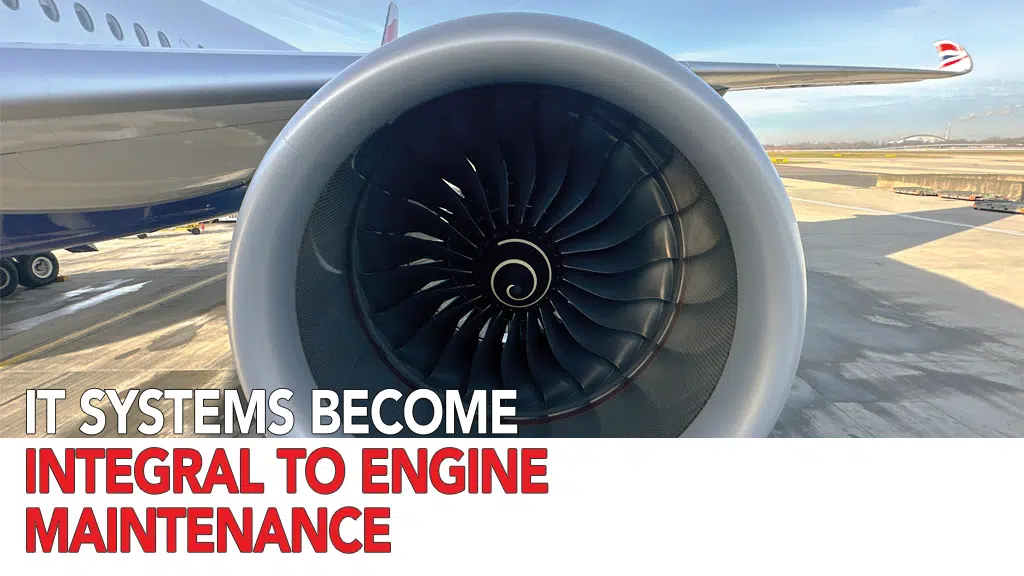
IT Systems Become Integral to Engine Maintenance

IT Systems Become Integral to Engine Maintenance

Now more than ever, airlines and maintenance, repair and overhaul (MRO) organizations are seeking ways to improve their engine maintenance programs in a bid to reduce costs and improve turnaround time. One way these companies are doing this is by applying advanced information technology (IT) systems to engine monitoring, maintenance, and troubleshooting. “There is an increasing focus to move more towards data-driven decision making as opposed to a hardware-driven process, which has traditionally been the dominating paradigm,” said Markus Wagner, head of digital maintenance services at MTU Maintenance.

Markus Wagner - Head of Digital Maintenance Services,MTU Maintenance
Markus Wagner – Head of Digital Maintenance Services,
MTU Maintenance

Qualities of an Effective IT System

IT systems improve aircraft engine maintenance by analyzing the data being collected by engine sensors during flight. They then analyze this data to assess engine performance, alerting human technicians to any immediate issues and signs of potential problems.

To be truly useful, an engine maintenance IT system must possess certain qualities. One of these is the ability to analyze engine-related data with minimal human supervision, through a process that Prakash Babu Devara, head of marketing (aviation) for Ramco Systems (maker of the Ramco MRO Aviation Solution platform) refers to as “smart automation”.

Prakash Babu Devara Head of Marketing, Ramco Systems
Prakash Babu Devara
Head of Marketing, Ramco Systems

“Engine maintenance processes generate a wealth of data pertaining to the defects, parts consumed, labor hours, and elapsed time to carry out repair and overhaul procedures,” explained Devara. “Accumulated over time, this data can become a goldmine of information to gain insights. Our solution derives insights into all key processes by analyzing this data, and provides Key Performance Indicators (KPIs) related to Turnaround Time (TAT), quality, cost, resource utilization, and warranties dynamically without any need for manual consolidation and preparation.”

Worth noting: All of these capabilities must be made available to mobile devices on the shop floor. Doing so allows aviation mechanics to book appointments, report their findings, request parts and tools, and access technical documents everywhere — along with collaborating with other technicians through chat, videocall, and screen share from the same device.

Matthias BeckHead of Digital Products Engine Service, Lufthansa Technik
Matthias Beck
Head of Digital Products Engine Service, Lufthansa Technik

Lufthansa Technik is a strong believer in using IT systems to enhance its engine maintenance operations. But just extending these systems throughout the entire operation isn’t enough. To ensure that they deliver their promised benefits, “seamless and consistent user experiences across IT solutions are key,” said Matthias Beck, head of digital products/data & analytics engine service for Lufthansa Technik. In other words, these systems must be designed to be intuitive and easy to use, as well as far-reaching and being deployed enterprise-wide.

Lufthansa Technik is working to digitize the entire process of its MRO Management platform. The company says it simplifies and streamlines vast amounts of information and communication flowing back and forth between them, as the MRO, and the aircraft operator. Lufthansa Technik image.

The payoff from these efforts are better results for all. “By digitalizing the entire process in our MRO Management platform, we simplify and streamline the vast amount of information and communication flowing back and forth between us as the MRO and the aircraft operator,” Beck said. “The accessibility independent of location and time, as well as the visualization of all details in a dashboard in a structured and standardized form, enables our customers to have a real-time overview of the status and shows where immediate action is required if necessary.”

Beck’s last point is endorsed by Devara, who emphasized that everyone in the engine maintenance supply chain needs access to this information to achieve maximum benefits. “The seamless flow of data between the ecosystem partners such as suppliers, contractors, shipping partners, banks is essential for augmenting operational efficiency,” he said.

Henrik OllusVP, QOCO
Henrik Ollus
VP, QOCO

Another necessary feature of an effective engine maintenance IT system is reliable, wide-ranging access to digital documentation. This requires the engine maintenance organization using the system to be paperless, “and also not to be reliant on PDFs and other non-machine-readable formats,” said Henrik Ollus, vice president of aviation data exchange business at QOCO Systems (maker of the cloud-based engine maintenance IT system Aviadex.io). “Only once the data is reliably available in a machine-readable format is real automation possible.”

Ollus added that rigorous data accuracy is a must for these IT systems, given how much is riding on aircraft engine maintenance. “Ninety-five percent data accuracy is not enough in the highly regulated aviation industry,” he said. “Proper data quality controls are needed. This again highlights the importance of machine-readable data formats, as automated data quality checks and cross-system reconciliation can then be applied.”

Alf Cherry CIO, Commercial Engine Services, GE Aerospace

End-to-end coverage of all work functions is a further necessity for engine maintenance IT systems, since gaps can lead to errors. This is why “the IT systems in the GE MRO network cover all aspects of engine overhaul activities,” said Alf Cherry, CIO, Commercial Engine Services at GE Aerospace. As well, “consistency across the GE Aerospace MRO network drives quality data capture,” he noted. “This ensures efficient coordination, quick information exchange, and accurate customer updates, resulting in faster service delivery.”

Unfortunately, this level of connectivity can run counter to the traditional ways that many engine maintenance shops are structured. “In these organizations, the data points between Engineering, Supply Chain, Hangar/Shop Floor, and Finance sit in silos, for reasons that were chosen with a department’s interest in mind as opposed to a cross-organizational need,” said Sriram P. Haran, founder and CEO of KeepFlying Pte Ltd., which uses artificial intelligence (AI) to analyze risks in the aviation industry.

The same shortfalls apply to some vendor-provided software as well. “For instance, OEM-driven tools from GE, Pratt & Whitney, and Rolls Royce provide coverage as part of managing shop visits, exchanging trend and sensor data broadly within the spectrum of predictive maintenance,” Haran said. “However, this doesn’t encompass fundamental airworthiness data points inherent to each engine.”

The Power of AI

AI is at the heart of today’s engine maintenance IT systems. With its ability to process massive amounts of sensor data and apply them to digital versions of physical engines — a process known by the name of “digital twins” — AI makes it possible to track, record, and model every change occurring in an actual engine from the day it was designed to its service history. In this way, AI provides engine maintenance shops with an unparalleled ability to manage and diagnose every single one of their clients’ engines in detail. It also provides sufficient processing power to detect signs of problems as they occur, and even before!

Dinakar DeshmukhVP of Data and Analytics, GE Aerospace
Dinakar Deshmukh
VP of Data and Analytics, GE Aerospace

“These days, digital twins and artificial intelligence are playing a significant role in fleet management and MRO efficiency,” said Dinakar Deshmukh, vice president of data and analytics, GE Aerospace. “For instance, GE Aerospace has been using contemporary digital technologies to build the digital twins of every flying GE commercial engine, which are used to monitor and take appropriate action enabling optimized operations for both customers and the business. GE employs a unique approach of fusing deep domain understanding coupled with machine learning (aka ML, a subset within artificial intelligence) to build these differentiated twin models. This resulted in significant improvement in fleet management — namely a reduction in false positives, increased lead time and asset utilization.”

Deshmukh’s positive assessment of AI and the digital twins it enables is shared by every company who spoke to Aviation Maintenance for this story. The enthusiasm of their assessments is worth quoting, in order to drive home how strongly they support this IT system approach.

A case in point: at Lufthansa Technik, the employment of AI and digital twins “opens new possibilities for engine maintenance,” Beck said. “Through condition monitoring and the continuous assessment of engine parameters, such as temperature, pressure, vibration, and fluid levels, any abnormalities or early signs of malfunction can be identified. Advanced sensors and monitoring systems can collect real-time data and provide valuable insights into the engine’s overall health. By tracking these parameters, potential issues can be detected early, allowing for timely interventions and reducing the likelihood of failures.”

In plain language, “by leveraging machine learning and advanced analytics, AI can identify patterns and correlations that human operators might miss,” said Devara. “This enables proactive maintenance strategies, reducing downtime and increasing operational efficiency.”

AI can also reduce the occurrences of AOG (Aircraft on Ground), while also cutting scheduled maintenance costs and making preventive maintenance possible.

For example, “Lufthansa Technik has developed proprietary, physical-based (thermodynamics) models to apply AI and ML algorithms to predict aging, crack propagations, fouling and wear of compressor and turbine parts, amongst others,” Beck said. These predictions allow this MRO to take a more preventative approach to engine maintenance, including deleting scheduled service when the facts show it to be unnecessary.

“Rather than following a fixed maintenance schedule, operators and MROs can schedule maintenance activities when the engine’s condition indicates a need for intervention,” said Beck. “This proactive approach minimizes unexpected breakdowns, extends the engine’s lifespan, and optimizes operational efficiency and time-on-wing compared to traditional approaches.”

Sriram HaranFounder and CEO,
KeepFlying
Sriram Haran
Founder and CEO,
KeepFlying

Then there’s the financial implications of AI, which are considerable in themselves. “Digital twins have been very useful to the aviation business,” said KeepFlying’s Haran. But their usefulness goes beyond keeping engines in service: “While we are still exploring extended uses of this technology, the moment has come to understand how commercial implications of decisions against your engines, for instance, can be represented as a digital twin,” he explained. “Thus, the FinTwin was born — a financial twin that allows you to visualize the commercial impact of a decision against an asset using its underlying airworthiness and maintenance data with AI-driven data models.”

In the same vein, “standardizing data exchanges between the ecosystem of lessors, OEMs, airlines, MROs, CAMO facilities and supply chain vendors — especially with the crisis around supply chain TAT today — is critical to ensure that the airline industry can make profit margins greater than the industry’s 1.8% predicted by IATA by the end of this year,” Haran added.

AI and digital twins are opening new possibilities for engine maintenance according to Lufthansa Technik. Condition monitoring and continuous assessment of temperature, pressure, vibration and fluid levels, allows for abnormalities and signs of malfunction to be identified early. Lufthansa Technik image.

The Limits of IT Systems

So far this article has waxed poetic about the many benefits of engine maintenance IT systems, especially those enabled by AI/ML. But it is worth noting that, as good as they are, these IT systems have their limits. These limits need to be kept in mind when relying on these systems, because even the best of AI-enabled IT systems are not meant to run without human supervision.

One of the most basic limits is the quality of information being fed into an IT system. If this information is of poor quality, the same will be true for the data that the system outputs, even if it is assisted by AI.

Take digital twins, for instance. “The key for their usefulness is based on the granularity, quality, and timeliness of the data that built up that digital twin,” Ollus said. In other words, the quality (or lack thereof) of any digital twin is governed by the “garbage in/garbage out effect,” he observed. (Also known as GIGO, this is a longtime computer programming term, meant to caution programmers and clients of expecting too much from too little.) “AI-powered tools are at their best when based on large amounts of data.”

A lack of machine-readable data on specific engines — particularly older models — can also hamper an AI-enabled IT system’s ability to do its job properly. “Non-availability of key technical data for specific engines and its life-limited parts (LLP) is one of the challenges that Ramco is seeing in the market,” said Devara. “The fact that this technical data still resides in silos and paper formats is undermining the value of digital technology to engine maintenance. Accessing this data and utilizing it effectively remains a key area of focus in the industry.”

Finally, “the biggest challenge probably lies in the harmonization of newly-developed digital tools like AI-assisted MRO planning with legacy systems that have been around in the industry for decades,” Wagner said. “It is very much an ongoing discussion.”

All of these limits are not standing in the way of IT systems adoption by engine maintenance organizations. In fact, “nothing is changing the MRO industry and is driving the development of new solutions more than digitalization,” Beck said. “It is the only game changer of this decade. With 50 times more data generated by new aircraft types and approximately 50% of airline operating costs consisting directly or indirectly of MRO services, further cost reductions can only be accomplished through MRO and operational optimization driven by digitalization.”

What’s Coming Next?

As powered as today’s AI-enabled engine management IT systems, they will be able to do even more in the future as processing power increases and processing algorithms improve.

So what’s coming next? “I predict an extension in data exchange, as opposed to point-to-point integrations and manual data sharing,” said Ollus. “Data sharing platforms will ensure access to data from many/most airlines through the same platform, rather than just relying on one airline’s content.”

“Profitability margin improvement requires airlines to take a closer look at their data management/data exchange ecosystem,” Haran agreed. As well, “the time is ripe to latch on to the wave to explore avenues that can make it easier to transition towards a paperless ecosystem — not only within the hangar or shop floor but across departments to stick to net zero carbon goals.”

GE Aerospace is looking forward to AI-assisted automatic inspections where possible, with these IT systems “automatically feeding this inspection information to drive continuous improvement of predictive digital twins,” said Deshmukh. “Some of the low hanging improvements we can think of are processing customer workscoping data from PDF-based documents, leveraging the historical data and machine learning for estimating the scrap rates and workscopes,” Devara added. “We can also optimize the usage of specific serial numbers of parts for meeting the customer demands and reducing the cost.”

All told, the “digitization of TechOps will further gain importance in airlines’ value chain steering and optimization,” said Beck. In this digitalized world, “data access and ownership will be key for airlines to maintain independence.”

“We are always looking for ways to improve the IT-based services of the entire MRO process for two reasons,” Wagner said. “One is to increase the efficiency of our MRO processes and two is for business enablement purposes. If we can continue to develop newer and better ways of conducting maintenance work, we can offer the market exactly what it demands.”

Summing up, the integration of information technology into engine maintenance programs is significantly enhancing the accuracy and speed at which these services are being provided by airlines and MROs. Advanced analytics capabilities enable real-time monitoring and proactive detection of potential issues, while predictive modeling algorithms optimize maintenance schedules. Additionally, the seamless communication facilitated by IT systems ensures that all stakeholders have access to timely and relevant information. As this technology continues to advance, we can expect further improvements in AI-enabled engine maintenance IT systems and their processes, ultimately leading to safer and more efficient air travel.

Avionics Testing Systems

Avionics Testing Systems

Testing for unexpected avionics problems helps planes safely operate as scheduled.

Avionics systems play a critical role in aircraft safety and performance. Avionic systems manufacturers and designers must be confident in the reliability, endurance and safety of aircraft and engine components’ subsystems and full systems. Avionics test equipment used during the manufacturing and maintenance of aircraft avionics systems helps planes operate as scheduled and at peak efficiency. Also, this equipment assists engineers and aircraft companies ensure full compliance with heavily controlled federal regulations, specifications and standards. Aircraft structures must go through many levels of testing before receiving airworthiness certification by the Federal Aviation Administration (FAA) or Department of Defense (DoD).

Essential Equipment

Some consider avionics repair and testing equipment to be the most essential equipment used in the production, troubleshooting, repair and maintenance of aircraft and their avionics systems and instruments. Primarily used for calibration, inspection, evaluation and testing of various aircraft devices, avionic testing systems aim to inspect and resolve electrical and mechanical issues, conduct performance checks, and repair the brakes and other components of the aircraft.

The quantity and diversity of equipment and systems requiring testing in avionic systems equates to an equally complex range of test equipment. Avionics test equipment can be divided into two categories: general test equipment and specific test equipment. General test equipment can be used to perform tests on avionics systems in general, such as diagnostics, fault detection, and performance measurements. Specific test equipment is more specific and is used to test specific components or systems of a particular type of aircraft.

Actual test system equipment covers items from signal generators and digital voltmeters to autopilot servo test stands for clutch torque evaluation. Vacuum and pressure instrument chambers, manual turn and tilt tables, single axis rate tables and tachometer testers are some other common aviation test equipment. Bench-type equipment is primarily used for repair and alignment of avionics equipment and normally is larger in size than the smaller portable equipment used to service the aircraft on the ramp for troubleshooting.

Standard tensile, compression, shear and fatigue coupon tests, using the material properties quantified in these tests, help determine component material composition, dimensions, and joining methods. Designs must then be verified by testing individual components, systems, and entire airframe structures. Component and airframe tests allow for interactions between parts of an aircraft, providing the most realistic test scenario possible without actually flying the aircraft. Like coupon tests, full-scale airframe tests are conducted in static and fatigue loadings and can be conducted on undamaged or damaged airframes.

SET uses standardized modules from their construction kit that includes measuring technology, signal conditioning, power control units, software and hardware, to quickly and efficiently implement customer requirements for functional testers and production testing. SET Image.

Common Types

While there are hundreds of different aviation test equipment apparatus, here are two of the most common.

Over the past two decades performance flight testing of full-scale aircraft has transferred some of the testing workload to simulation-based systems. In addition to simulating flight conditions with their 3-D capabilities, simulators can create a realistic environment for aircraft system testing. They can find errors in aircraft functions, systems, and components in real time.

A computer simulation-based environment is not only less expensive than flight testing full-scale aircraft in a real-world environment but all the aircraft’s systems can be modelled in the simulation. In addition to mathematical modelling, other technologies behind simulation testing include real-time computation, motion actuation, visual image-generation systems and projection systems. All the aircraft’s systems, such as avionics and sensors, can be directly built into the simulation just as they would be on the actual aircraft. Simulation tests allow the use of extra measurement equipment that might be too large or otherwise impractical to include on board a real aircraft. Throughout different phases of the design process, different engineering simulators with various levels of complexity are typically used.

Benchtop test systems also provide a realistic environment for testing aircraft systems. Compared to simulators they are more compact, more portable, lighter in weight, less power-hungry, and require fewer maintenance personnel. They are also less expensive than simulators and can be used to test a wider range of aircraft systems. Many benchtop test systems are configurable and scalable. They can solve typical functional test coverage challenges throughout an aerospace product’s life cycle — and many are upgradable as test requirements evolve.

A testament to the versatility of benchtop aviation test equipment, Severn Beach, Solihull, United Kingdom-based GKN Aerospace has patents approved covering a new benchtop ice adhesion test device which incorporates apparatus to simulate icing conditions and then determine ice adhesion in situ. This will enable swifter, less costly assessment of promising ice phobic coatings and other ice protection technologies. Efficient ice protection systems lower power consumption, improving aircraft efficiency and lowering emissions.

Nondestructive Testing

Two of the most important methods for aircraft testing include the nondestructive procedures eddy current testing (ECT) and ultrasonic testing (UT). Compared to other NDT methods, ECT and UT can detect more flaws in less time and without the hassle of extensive setup times. With ECT, NDT analysts can cover surface defects and near-surface defects with greater efficiency and speed. UT also probes the same anomalies on a volumetric level and with the same expediency.

There are tools and equipment available that enhance ECT and UT functionality. This includes instrumentation with specialized capabilities that foster flexible scans and additional customization schemes. These are instruments capable of phased array ultrasonic testing (PAUT) and eddy current array (ECA), the most effective NDT methods of all the currently available options for commercial aircraft inspections.

Conventional ultrasound is more advanced than most NDT techniques and phased array ultrasound is better still. Traditional UT has inflexible scanning positions and limited customization options, preventing analysts from finding flaws in awkward angles. With PAUT however, inspectors can customize the beam shapes, adjusting the focus depths and achieve several angles. PAUT addresses the inconsistent thickness patterns of aircraft components. It’s also malleable enough to conform to the shape and texture of any component being tested.

At right is the ARA-552 Radio Altimeter Analog Adapter, designed to facilitate flight line testing of aircraft autoland systems, ground proximity warning systems and installed altimeter systems. Together with the ARA-552 Hand Held Controller, this set provides capabilities for testing a wide range of analogue altimeters in a variety of aircraft. Atlantis Avionics image.

Eddy current array enhances conventional eddy current testing through the multi-coil features in a single probe. The additional coils allow NDT inspectors to scan a wider radius while detecting more defects in less time. ECA has a very good best signal-to-noise rate (SNR), which boosts the probability of detection (POD). ECA probes can also spot hard-to-find anomalies in the form of pitting, surface cracks and corrosion.

Shown at left, is the TestStation LX2, Teradyne’s largest pin count in-circuit test system. The company says it is configurable up to 15,360 pins utilizing UltraPin II 128HD pin cards for testing large, complex and heavily-integrated printed circuit board assemblies. Teradyne image.

Other Testing

Other aerospace tests include:

Dynamic testing. Vibration, shock and acoustic noise dynamic testing equipment are in this group. Most vibration tables and shakers are capable of delivering up to 70,000 force/pounds, acceleration forces up to 750g and pyro-shock capabilities.

Stress analysis and failure assessment. Materials fracture mechanics, fatigue, finite element analysis, inspection and welding tests are in this group to provide failure analyses.

Cloud testing. This is a centralized testing system where testing data can be uploaded for all interested parties to view and interpret in real-time. Engineers can obtain information from testing data from other similar aircraft. They can then use this data to correlate with their own inspection.

Environmental simulation. Environmental simulation chambers can test everything from individual devices to complete systems. Combined environment testing including temperature, humidity, altitude and vibration, explosive atmospheres, sand and salt fog and more are in this group.

Fuel testing. Overall efficiency and performance of all-important fuel tank and fuel system components can be tested in this group. Fuel icing and contamination of fuel testing, helium leak tests, flow analysis, functional/qualification testing are available.

Testing Standards

Many standard test methods have been created for testing certain aviation materials. These test methods are published and updated by standards organizations such as ASTM, ISO, CEN, NASM, and DIN. Some of the more common include:

• ISO 6892-1 & 2 Metal Tensile Testing
• ISO 527 – Tensile Test of Plastics Composites
• ASTM C1273 Tensile Ceramic Test Equipment
• ASTM C1424 Compression Ceramics Test Machine
• ASTM D638 Tensile Testing for Plastics
• ASTM D695 Compression Testing for Rigid Plastics
• ASTM D4762 Polymer Matrix Fiber Reinforced Composites Test Equipment
• ASTM E9 Compression Testing of Metallic Materials at Room Temperature
• ASTM E8 Tension Testing of Metallic Materials

Avionic testing equipment can involve testing and simulation using standards such as MIL-STD-1553 and ARINC-429 and embedded systems such as multi-protocol modules and interfaces.

RTCA DO-160

RTCA DO-160 (Environmental Conditions and Test Procedures for Airborne Equipment) covers standard procedures and environmental test criteria for testing airborne electronic equipment and mechanical systems with numerous regulatory requirements. It ensures airborne equipment meet the airworthiness requirements for fixed-wing and rotary-wing aircraft. The most current revision, RTCA DO-160G, specifies tests that are typically performed to meet the requirements of the Federal Aviation Administration (FAA) and other regulatory bodies for equipment installed on aircraft. It has become a common testing standard recognized throughout the aerospace industry.

RTCA DO-160 is used by all major aircraft manufacturers to ensure that electronic systems and components are safe and reliable in any environmental condition. It is applicable for any aircraft, from business jets and helicopters to full-scale airliners. It includes 23 sections of test methods covering all aspects of the aircraft environment from temperature, altitude, shock, and vibration to RF emissions, lightning effects, and flammability.

Mid-Atlantic Opportunity Park to Serve as Pennsylvania’s Newest Regional Hub for Aviation Industry

Mid-Atlantic Opportunity Park to Serve as Pennsylvania’s Newest Regional Hub for Aviation Industry

It’s no secret that the aviation industry is experiencing significant shifts and growing pains. Demand for pilots, mechanics and maintenance technicians are at all-time highs while the industry continues to face workforce shortages and personnel retirements. Despite these challenges, the industry isn’t slowing down anytime soon, which is why those who are working to build aerospace clusters, address workforce challenges, foster collaborations and incentivize new projects are so crucial to the health of the industry and the advancement of their local communities. It is with such demand in mind that we are thrilled to move forward with the development of the Mid-Atlantic Opportunity Park — a groundbreaking expansion spanning nearly 130 acres across the John Murtha Johnstown-Cambria County Airport (JST).

Dr Larry J Nulton

A collaboration of partners with the shared goal of building up western Pennsylvania’s aviation industry and assets is leading to transformative change and innovation in warp-speed time. Centered around a planned aviation maintenance and service hub, the Mid-Atlantic Opportunity Park is an example of leaders coming together to meet industry needs head-on. By advancing aviation training programs, offering unmatched incentives and creating an ecosystem for success, we are establishing an ideal scenario for aerospace companies seeking growth while fostering progress for both the region and industry.

At the core of the Opportunity Park will be a state-of-the-art, 100,000-square-foot Maintenance, Repair and Overhaul (MRO) facility with direct access to a 7,000-foot runway. This facility will significantly enhance the airport’s capabilities, serving as a regional hub for routine repairs, servicing and inspections of aircraft, including narrow body airline, military and corporate aircraft. We are actively pursuing an MRO operator to anchor this facility which will be supported by avionics parts suppliers, as well as distribution and training facilities.

Shown here is the ceremonial groundbreaking for the Mid-Atlantic Opportunity Park  expansion project,  spanning nearly 130 acres across the John Murtha Johnstown-Cambria County Airport (JST). Mid-Atlantic Opportunity Park image.
Shown here is the ceremonial groundbreaking for the Mid-Atlantic Opportunity Park expansion project, spanning nearly 130 acres across the John Murtha Johnstown-Cambria County Airport (JST). Mid-Atlantic Opportunity Park image.

When the Opportunity Park opens in 2024, this venture will not only create hundreds of high-wage jobs, but also stimulate the growth of the aviation/aerospace industry in western Pennsylvania to effectively meet escalating demand. To ensure success, we are working on aviation curriculum that will be infused into regional high schools; have secured a Keystone Opportunity Zone (KOZ) designation committed to offering competitive business incentives; are developing a commercially viable, first-of-its-kind UAS ecosystem, and much more. All of these pieces meshed together mean one thing: this region is the place to be for MROs and new aviation businesses that want to expand, meet their needs and have the long-term systems and support in place to do just that.

Strengthening the Workforce Pipeline

One of Pennsylvania’s greatest strengths lies in its highly skilled and diverse workforce. From top-ranked state colleges and universities to aviation and technical schools, the Laurel Highlands region of western Pennsylvania is surrounded by top-notch talent — with new industry-focused programs and partnerships being established all the time.

Our aviation ecosystem is only as strong as the workforce that supports it, which is why I’m excited about the new initiatives in our region that are gaining momentum and drawing attention from the industry.

In 2022, Saint Francis University (SFU) expanded its existing relationship with Nulton Aviation Flight Academy to provide students access to SkyWest Airline’s Elite Pilot Pathway and Aviation Maintenance Training Pathway programs. SFU received a $1 million grant from the Appalachian Regional Commission to establish an Aviation Maintenance Technician School, and SkyWest even donated a decommissioned CRJ200 aircraft to SFU last year, offering aspiring aviation mechanics real-world, hands-on experience.

We’re also excited to be taking our aviation training and workforce development into high school classrooms. Work is well underway to integrate aviation curriculum into regional public high schools starting as early as this fall.

Furthermore, it’s well known that some of the nation’s leading aviation education and training establishments are located here, including the Aviation Institute of Maintenance, Pittsburgh Institute of Aeronautics, and Pennsylvania College of Technology. In addition to these world-class institutions, the area boasts over 212,140 students enrolled in higher education, with Indiana University of Pennsylvania, Saint Francis University, the University of Pittsburgh and Penn State University serving as educational pillars.

Our workforce pipeline is strong and growing. Our partners are dedicated to nurturing the workforce that’s needed now and well into the future, and we are ensuring that western Pennsylvania is one of the most attractive destinations in the country for the aviation industry for generations to come.

Fostering the Ecosystem With Support From Forward-Looking Leaders

As an entrepreneur, I’ve had the privilege of working in other states and have partnered with many business leaders who have worked in other parts of the country, as well, and I can tell you with certainty that the business, academia and government leaders here in the Keystone State are unlike any other. Their can-do attitude, collaborative spirit and positive pro-business mindset are unprecedented and directly contribute to economic development success.

One such partnership is Aerium, a new nonprofit launched in 2022 by numerous partners, dedicated to creating education and career opportunities in the aviation industry. Like the Opportunity Park, Aerium has garnered substantial state and local support, receiving over $13 million in funding over just a few years. As the chair of Aerium, I can confidently say that we envision it playing a critical role in the development and expansion of our region’s aviation industry and workforce, including that of the Mid-Atlantic Opportunity Park, for decades to come.

In addition to the partnerships between Aerium, SFU, Nulton Aviation, SkyWest and others, our initiatives have garnered immense support from the Pennsylvania Department of Transportation, the airport authority, federal, state and local leaders, and many more. This collective effort has enabled the Opportunity Park to secure a Keystone Opportunity Zone designation — one of the nation’s boldest and most generous economic development programs — that offers tax abatements, exemptions, reductions and credits to businesses that choose to establish themselves within the zone. Moreover, most business purchases within the zone will be exempt from state and local sales tax for property used in operations.

We also look forward to the strong potential of the region to be a leader in the UAS sector. With the Pennsylvania Drone Association as a key partner, we are working to incorporate a commercially viable UAS ecosystem within the Opportunity Park — with the vision to offer rapid-response drone medical deliveries, beyond visual line of sight operations (BVLOS), provide collaborative opportunities with our defense sector partners and support local UAS business operations — making this region a first-of-its-kind in the space.

None of these achievements would be possible without the engagement of our key partners. Federal, state and local leaders have joined forces to make our region one of the most attractive destinations in the country for the aviation industry. Pennsylvania State Senator Wayne Langerholc (chair of Transportation), U.S. Congressman John Joyce, U.S. Congressman Glenn “GT” Thompson, Pennsylvania State Representatives Jim Rigby and Frank Burns, members from the Cambria County Board of Commissioners, and others have all actively worked to bring the Opportunity Park to life by supporting our many industry initiatives.

I think Senator Langerholc summed up the state’s support best when he said that this park has the opportunity to be a “real game changer” and that “we have advocated across many levels — local, state and federal — to get the necessary dollars here and help fund this great project.”

As a passionate advocate for the aviation community in western Pennsylvania, I’m thrilled to witness the remarkable progress made by these strong public-private partnerships to expand and advance the aviation ecosystem in the region and directly meet industry needs. From breaking ground on the Mid-Atlantic Opportunity Park to strengthening our workforce pipeline and paving the way for industry growth, numerous partners are working hand-in-hand to transform and evolve the industry.

The facilities are in close proximity to John Murtha Johnstown-Cambria County Airport and will benefit from the support and services of Cambrian Hills Development Group-affiliated fixed base operator Nulton Aviation Services. The airport itself is equipped with a direct-access, concrete-reinforced, 7,000-foot-long, 150-foot-wide runway. Mid-Atlantic Opportunity Park image.

Strategic Location

Anticipated to open in 2024, the Mid-Atlantic Opportunity Park offers build-to-suit leases in an ideal location for companies seeking access to a highly mobile population and a region with a growing industrial base. Situated in the heart of the northeastern United States, it provides direct access to prominent metropolitan clusters such as New York, Pittsburgh, Harrisburg, Philadelphia, Boston and Washington, D.C. This advantageous proximity allows companies to tap into large customer bases, establish robust supply chains, and facilitate seamless transportation of goods and personnel.

Pennsylvania’s rich aviation heritage, demonstrated by its commitment to aerospace innovation and industry, further enhances its appeal. The region is home to renowned institutions like NASA’s Wallops Flight Facility, while industry giants such as Lockheed Martin and Martin-Baker have chosen it as one of their bases of operations. This legacy fosters a culture of excellence, attracts top talent, and creates a collaborative ecosystem for the growth and development of new aviation technologies.

The surrounding Cambria County communities also offer an outstanding and affordable quality of life, with the added advantage of being a short drive from the metropolitan assets of Pittsburgh and Philadelphia. Nestled in the scenic Laurel Highlands of western Pennsylvania, the region boasts a vibrant history in the steel industry and a wide range of historical, cultural and recreational offerings. The area’s economy has also experienced significant expansion in health care, technology and finance, providing ample opportunities for both residents and businesses to grow.

With its close proximity to John Murtha Johnstown-Cambria County Airport, the Opportunity Park benefits from the support and services of Cambrian Hills Development Group-affiliated fixed base operator Nulton Aviation Services, while the airport itself is equipped with a direct-access, concrete-reinforced, 7,000-foot-long, 150-foot-wide runway.

By continuing to develop and support the Mid-Atlantic Opportunity Park, and by encouraging new business to locate to the Keystone State, we can harness Pennsylvania’s great potential to create job opportunities, attract industry players and drive economic growth. Through our collective efforts and the establishment of a robust aviation/aerospace ecosystem, western Pennsylvania is on track to emerge as a greater hub for the aviation and aerospace industries.

For more information about the Mid-Atlantic Opportunity Park, visit theopportunitypark.com.

About Dr. Larry Nulton:

An aviation entrepreneur and member of the Pennsylvania Transportation Advisory Committee, Dr. Larry Nulton graduated from Penn State University before earning his Ph.D. in Clinical Psychology from Bowling Green State University. Today, Dr. Nulton is the co-owner of Nulton Aviation Services, chair of his new nonprofit, Aerium, and CEO of Cambrian Hills Development Group, the organization responsible for the development of the new Mid-Atlantic Opportunity Park.

Aircraft Values Through the Pandemic A Market Overview

Aircraft Values Through the Pandemic A Market Overview

narrowbody widebody aircraft utilization

Covid-19 Impact on Aircraft Utilization

On March 11, 2020, the World Health Organisation (WHO) declared Covid-19 a pandemic. By April 6, 2020, the United Nations World Tourism Organization reported that 96% of all worldwide destinations were subject to some form of travel restriction. Using AviationValues data we examine the impact Covid-19 had on the commercial passenger industry.

The severity of the impact on the commercial aviation industry, due to the unprecedented drop in passenger demand, is illustrated by the chart below. AviationValues tracks the positions of the global passenger fleet daily using each aircraft’s ADS-B signal. This enables a picture of each aircraft’s activity to be built, showing when it is in active service versus temporarily parked or in longer term storage.

In the years leading up to 2020, the percentage of the fleet in active service was relatively stable at around the 90% level for widebodies, slightly higher for narrowbodies. By April 2020 the imposition of travel restrictions, particularly into and out of major travel markets, forced a large proportion of the fleet to become inactive.

Understandably, the closing of borders, and the resultant impact on international regional and long-haul travel demand, has had the most lasting effect on widebodies, which today have a fleet utilisation of 77%, lagging behind narrowbody fleet utilisation at 84%. Restrictions on the all-important transatlantic and transpacific markets were only fully relaxed in May 2023 with the removal of the United States’ Covid-19 vaccine requirement for all non-US travelers. Travel to the United States had been restricted in some shape or form from January 2020 when non-US travelers from China were first barred entry. China itself closed its borders under a ”zero tolerance” Covid-19 policy in March 2020, and was the last major air travel market to reopen, only doing so in January 2023.

percentage active aircraft

Because relaxation of travel restriction policies were not always coordinated, the recovery on international routes, predominantly served by widebodies, was much slower than recovery in domestic markets. By looking at snapshots of the fleet on the same day (June 29) between 2019 and 2023, we can see the impact of travel restrictions on representative aircraft types in the figure below.

fixed age market value

Narrowbodies, represented by the Airbus A320neo and Boeing 737-800, exhibited the highest resilience in terms of utilization, followed by widebody twins such as the Airbus A350-900 and Boeing 777-300ER. The Airbus A380, like the competing Boeing 747 quadjet, suffered the most significant drops in activity.

Covid-19 Impact on Values

At the start of the pandemic, there were expectations from opportunists that the drop in passenger demand would spark a wave of airline restructurings that would result in a flood of aircraft available for outright sale. There were certainly a number of restructurings that occurred, but lessors and financiers largely acted to avoid large numbers of repossessions, opting to renegotiate financing and lease terms and keep the aircraft with the operator who would contract to keep the aircraft looked after while in storage, itself a very costly exercise.

5 year old fixed age market value

In addition, a number of the more creditworthy airlines moved to sell and then lease back their aircraft to lessors, who, with cheap capital in plentiful supply, were able to increase their share of the commercial passenger fleet. As a result, there were relatively few (particularly considering the severity of the downturn) open market distressed trades occurring during the pandemic.

5 yr old fixed age value 737

Nevertheless, it was clear that the market had moved, and that an aircraft on the open market would simply not command the same price in 2020 that it would have done a year prior.

Using utilization as a proxy, together with transaction prices that AviationValues’ analysts and researchers uncover, AviationValues plots the daily market value performance for the entire range of commercial passenger aircraft types. A selection of these, averaged by month, are presented in the figure below, plotting the value that a five-year-old aircraft would have achieved at any point during the Covid-19 period. For comparison purposes the values of each aircraft type are indexed to its value of just before the start of the pandemic, on January 1, 2020. This enables a view of how aircraft values have been affected by the market, rather than by natural age depreciation. The index of the market low for each aircraft type, as well as its current value, is called out in the following table.

Figure 3 illustrates a trifurcation of the market among:

1. The top performers: new technology narrowbody and widebody twinjet aircraft such as Airbus’ A320neo and A350, Boeing’s 787 families (the 737 MAX was already grounded during much of the pandemic).

2. The middle performers: classic technology narrowbody and widebody twinjet aircraft such as the Boeing 737-800, Boeing 777-300ER, Airbus A320ceo and Airbus A330ceo.

3. The low performers: the large widebody quadjets: the Airbus A380 and Boeing 747.

5 yr old fixed age value A380

Top Performers

New technology twins refer to aircraft types with two engines that have been recently introduced into service or whose features, e.g., new technology engines, and/or fabrication of the primary fuselage structure, is out of composite rather than aluminium. Representing a significant technological or fuel efficiency advance over the preceding generation of aircraft. They include the following aircraft types:

• Airbus A220 family

• Airbus A320neo family

• Airbus A330neo family

• Airbus A350 family

• Boeing 737 MAX family

• Boeing 787 family

• Embraer E190/E195-E2 family

Market values for these aircraft types have largely recovered to their pre-Covid-19 (January 1, 2020) levels on a fixed age basis, and in some cases have now exceeded them.

Middle Performers

Classic technology twins refer to aircraft types with two engines that have recently ceased production having been superseded by new technology twins. However, they still retain a substantial presence of the overall fleet in current service. These include:

• Airbus A320ceo family

• Airbus A330ceo family

• Boeing 737 Next Generation family

• Boeing 777 family

• Embraer E190/E195 family

The demand for classic technology aircraft is driven to a large extent by their cost benefit relative to the new technology types that supersede them. In recent months, the availability of new technology replacement aircraft has been constrained by supply chain issues across all the manufacturers, and this has increased demand for classic technology aircraft as alternative lift.

Market values for the middle performers are generally still below their pre-Covid-19 levels on a fixed age basis, but are increasing.

Low Performers

The swift drop in international demand following the imposition of Covid-19 travel restrictions impacted the largest passenger aircraft, all of which feature four engines, particularly heavily:

• Airbus A380

• Boeing 747-8I

• Boeing 747-400

Market values for these types remain significantly below where they were prior to the pandemic.

Traditionally reserved for the longest range and highest capacity routes, the widebody quadjets have for decades seen a steady erosion of their market share in favor of higher frequency services operated by medium and large twinjets that can service long-range routes more efficiently.

This “fragmentation” effect first became noticeable in the 1980s on transatlantic routes where the advent of the Boeing 767 twinjet enabled direct services between secondary city pairs rather than funnelling passengers into Boeing 747s flying the New York London route. The introduction of the Boeing 777-200ER in 1997 and 777-300ER in 2004, enabled a similar expansion of transpacific routes beyond trunk routes such as Los Angeles Tokyo. New technology types have accelerated this trend, with even single aisle types such as the A321neo now used in regular service across the Atlantic and the 737 MAX 8 serving London Heathrow from Halifax, Canada.

This has left the largest quadjets deployed on high-capacity trunk routes where they were dependent on high passenger demand to offset their high trip cost. It was inevitable that they would be parked.

As demand has returned, the quadjets face the additional hurdle of being the most expensive to prepare for return to service and have lagged the recovery of smaller aircraft.

That being said, a number of operators have now reactivated at least a portion of their quadjet fleet, including Air China (747-400, 747-8); Asiana (747-400, A380); All Nippon Airways (A380); British Airways (A380); the dominant A380 operator Emirates (A380); Korean Air (A380, 747-8); the dominant 747 operator Lufthansa (747-400, 747-8, A380); Qantas (A380); Qatar (A380); and Singapore Airlines (A380).

Conclusion

The impact of the Covid-19 pandemic on the commercial passenger aircraft industry was unprecedented. Faced with near-zero passenger revenue opportunities on most international routes and severely curtailed demand on domestic services, airlines made drastic cuts to their active fleets.

AviationValues’ data shows a clear distinction between the highest performing aircraft, mostly new technology twin engine types; and the large four-engine widebodies that have struggled the most from a utilization and value point of view.

The market has proved largely resilient, but the recovery in both utilization and market value has very much depended on the aircraft type. Passenger demand rebounded first in domestic markets, for which smaller narrowbodies were the initial beneficiaries. Only more recently has the long-haul international travel on which widebody utilization depends started to come back.

The recovery in demand for passenger aircraft has been coupled with a constraint in supply of new deliveries, as well as available slots for maintenance due to well publicized supply chain issues. This has resulted in upward pressure on market values across the board for aircraft that are already in service.